The Pier at First Light: Pla Kapong Neung Manao and the Architecture of Sour

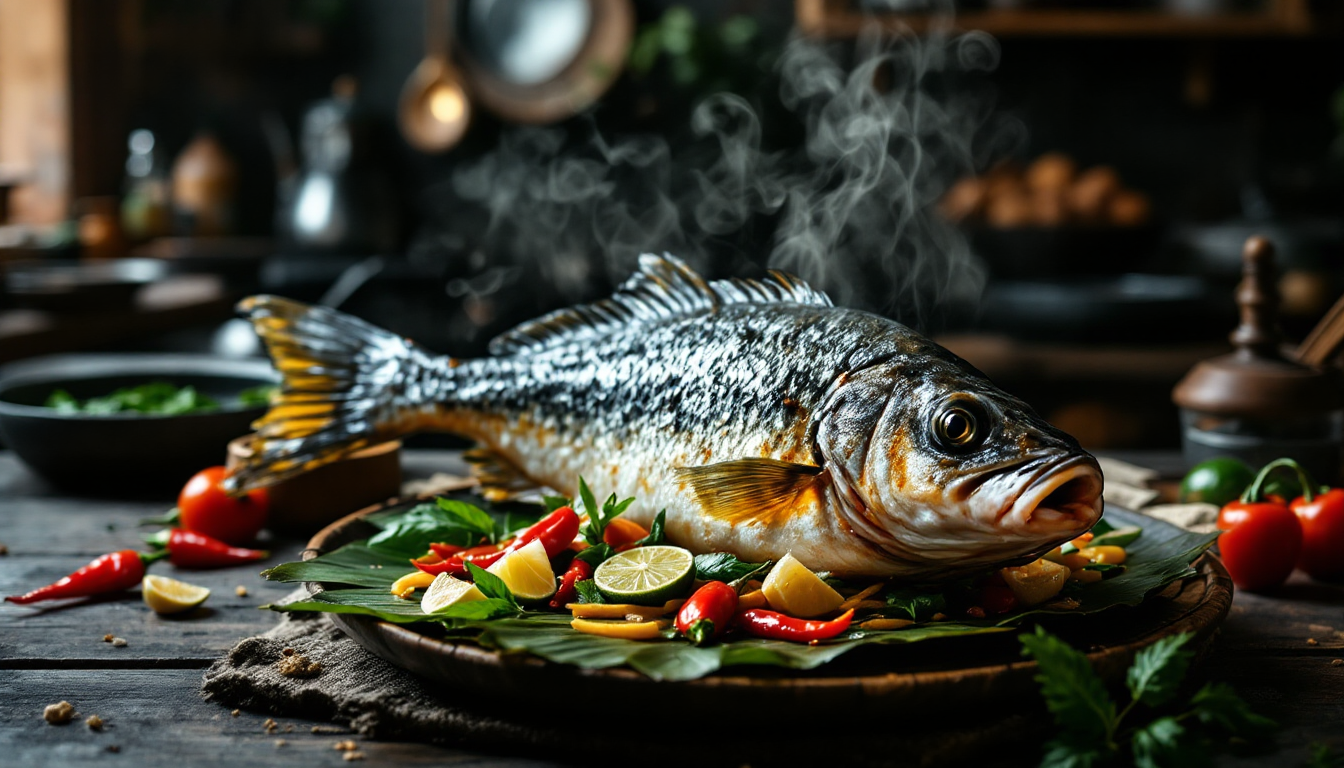
After kua kling, you know what heat looks like down here — direct, uncompromised, built for people who mean it. Today we move to the other end of the flavor spectrum. Not away from intensity. Just a different kind.
This lesson is steamed fish. Which sounds simple. Which is exactly the trap.
The Dish: ปลากะพงนึ่งมะนาว — Pla Kapong Neung Manao Steamed sea bass with lime, fish sauce, garlic, and chili
Walk down to the Khao Takiab pier docks at 5:30 in the morning — not as a tourist, as someone who lives there — and you'll watch the catch come in. Pla kapong, Asian sea bass, is what they pull from the Gulf in volume. It goes from net to market table in under two hours. The vendors at the covered market on the pier road sell it whole, still showing the colors of something recently alive. You'll learn to pick them the same way you learned to pick any protein — eyes clear, gills bright, flesh that springs back.
This dish is what the pier families eat. Not the tourist version with the composed presentation. The version where the fish comes to the table in its steaming vessel and everyone leans in.
What you're building here is the architecture of sour. Thai sourness is not lemon-on-fish, not simple brightness. It's layered — acid that cuts fat, acid that opens your salivary glands so every subsequent flavor hits harder, acid used as a vehicle for savory. Lime juice is the frame. Fish sauce is the load-bearing wall. Garlic and bird's eye chili are what make it inhabit your body rather than just your tongue.
Ingredients — for 2
The fish: - 1 whole pla kapong (Asian sea bass / barramundi), 600–700g, scaled and cleaned, scored 3 times per side - 1 stalk lemongrass, bruised and cut into 4cm pieces - 3 slices fresh galangal - 4–5 fresh kaffir lime leaves, torn
The sauce — this is everything: - 6 tablespoons fresh lime juice (roughly 4 limes — you'll squeeze more than you think) - 4 tablespoons fish sauce (น้ำปลา, nam pla — Tiparos or Megachef if you're stateside, whatever the pier market carries when you're there) - 1.5 tablespoons palm sugar, shaved or grated - 12–14 cloves garlic, roughly half minced fine, half thin-sliced - 8–12 bird's eye chilies (พริกขี้หนู, prik kee noo), stems removed, roughly chopped — you know your tolerance, start at 10 - 2 tablespoons fresh cilantro stems, minced (the stems carry more flavor than the leaves here)
Finish: - Large handful cilantro leaves and young stems - 3–4 thin slices fresh chili for color - 1 tablespoon neutral oil, very hot — you'll know why in a moment
Execution
Build the sauce first. This is a raw sauce — no cooking, which means every element has to be in balance before it hits heat during service.
Combine lime juice and fish sauce. Taste it. It should be aggressively sour and salty — more than you think is right, because steam dilution and the fat of the fish will pull it back. Add palm sugar and stir until dissolved. Add minced garlic and chopped prik kee noo. Let this sit for 10 minutes minimum. The garlic will lose its raw edge; the chili will begin to bleed into the liquid. Taste again. Adjust. This is the moment where your experience matters — you're not following a recipe, you're calibrating a balance. The sauce should make your mouth flood before it even touches the fish.
Set up your steamer. A wok with a rack works perfectly. Get it to a hard, aggressive boil. No gentle steam — you want violence in that vessel because the fish needs to set fast.
Stuff the cavity of the fish loosely with lemongrass, galangal, and torn kaffir lime leaves. These aren't eaten. They are the aromatic infrastructure that perfumes the flesh from the inside. Score marks on the outside will let steam penetrate; the aromatics inside do something different — they change the baseline flavor of the meat itself.
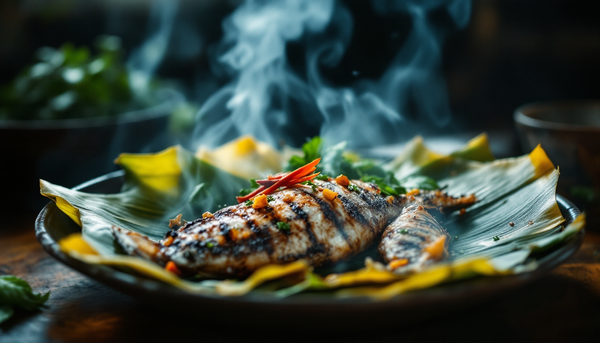
Place the fish on a shallow plate or banana leaf that will hold liquid. Steam hard for 12–14 minutes depending on thickness — check at the collar, which is always the last place to cook. The flesh should pull cleanly from the bone at the thickest point. Not falling apart. Just releasing.
Here's the move: the moment the fish comes off steam, pour the sauce over it immediately. All of it. The residual heat of the fish will bloom the garlic and chili without cooking them to death — you want them somewhere between raw and cooked, which is a specific register that only happens in this three-second window.
Now the hot oil. Heat a tablespoon of neutral oil in a small pan until it shimmers and begins to smoke. Pour it over the sliced garlic and fresh chili you've set on top of the fish. Listen to it. That sound — the sizzle, the bloom — that's not theater. The hot fat extracts volatile aromatics from the garlic that lime juice can't reach. The two techniques are extracting different compounds from the same ingredient. This is the dish teaching you something.
Scatter cilantro leaves immediately. Serve in the vessel.
What This Teaches
Kua kling showed you heat as the primary architecture. This dish shows you acid as primary architecture, with heat as counterpoint. In Southern Thai cooking these are the two poles everything else lives between. Every dish you eat in Khao Takiab will fall somewhere on that axis.
The steaming technique is also the beginning of a conversation about protein and water. You have more to learn from this method — there are variations with pla meuk (squid), with hoy malaeng poo (mussels) — but the logic stays the same. Aromatics from inside. Sauce applied in the heat window. Fat as extraction tool.
Soundscape
This meal has a specific quality — it's early morning energy that becomes midday clarity. No wok fire. Precise, attentive, quiet work.
Start prep with เขียนไขและวานิช (Khian Khai Lae Wanit) — acoustic folk, storytelling register, the kind of music that makes you pay attention to your hands while you're working. The pacing of their songs matches the pacing of building this sauce carefully.
When the steamer goes on, shift to Safeplanet — that clean, bright indie pop energy, something opening rather than driving. It matches the moment when steam starts rising and you're watching the fish through the lid.
At the table: BOWKYLION. She has a quality that sits perfectly with a meal like this — present, warm, not demanding your attention but rewarding it when you give it. The sourness of the dish and the clarity of her voice do the same thing to you.
Eat it while it's hot. The sauce will keep seeping into the flesh and you'll eat it differently at minute one than at minute ten. Both versions are correct. That's the other thing this dish teaches.