**The Night Market Logic: Gai Tod Hat Yai and the Science of the Crust**

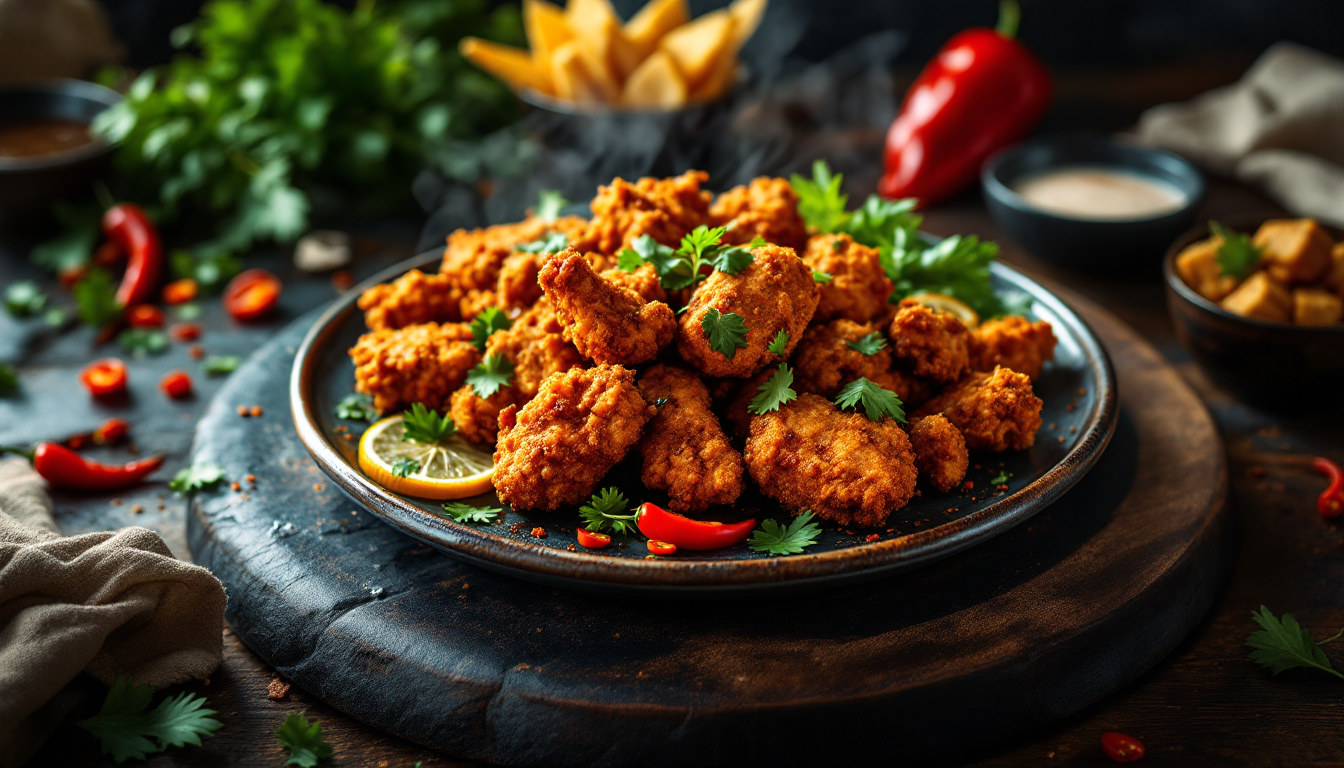
You've been steaming. You've been using acid as architecture. Now we go the other direction entirely — hot oil, rendered fat, crust that shatters. This is the dish that will make you understand why Southern Thai food hits differently than Central.
Context first.
Hat Yai is four hours south of Hua Hin, near the Malaysian border. It is not a tourist city. It is a real city — massive, commercial, Chinese-Malay-Thai in roughly equal measure — and it has given Thailand one of its most copied and least understood dishes: Gai Tod Hat Yai / ไก่ทอดหาดใหญ่, Hat Yai Fried Chicken.
You will find it at the Dechanuchit night market. You will find it at the pier vendors in Khao Takiab. It arrives on a plate with fried shallots piled on top like a crown and a small bowl of nam jim beside it. People eat it standing up. They eat it at midnight. There is no wrong time.
The dish looks simple. It is not simple. The complexity is in the sequence.
Gai Tod Hat Yai / ไก่ทอดหาดใหญ่
## Gai Tod Hat Yai / ไก่ทอดหาดใหญ่
For 2 people
### THE BRINE — START THE NIGHT BEFORE
This is the step most vendors won't show you. The tenderness isn't from technique at the fryer — it's from what happened twelve hours earlier.
- 1 whole chicken, broken down into bone-in thighs and drumsticks (4 pieces) — skin on, always - 1 liter water - 40g salt - 30g palm sugar (น้ำตาลปีบ / nam tan peep) — if you have it; if not, light brown sugar reads close - 4 stalks lemongrass, bruised - 6 makrut lime leaves, torn - 1 tbsp white peppercorns, cracked
Bring the brine to a simmer until salt and sugar dissolve. Cool completely. Submerge the chicken. Refrigerate overnight, minimum 8 hours.
The lemongrass and makrut aren't decorative. They're penetrating the meat. When you fry this chicken, the aromatics will bloom from inside the crust outward.
### THE PASTE — WHAT MAKES IT SOUTHERN
This is where Hat Yai diverges from every other Thai fried chicken you've had.
- 8 cloves garlic (กระเทียม / kratiem) - 2 tsp turmeric, fresh if you can find it — grated — or 1 tsp dried (ขมิ้น / kha-min) - 1 tbsp white pepper, ground (พริกไทยขาว / phrik thai khao) — more than you think you need - 1 tsp coriander seed, toasted and ground - 1 tbsp fish sauce (น้ำปลา / nam pla)
Pound to a paste in the mortar. Real paste — not chunky. The turmeric is the tell. Golden color, slightly bitter, distinctly Southern. Hat Yai sits where Thai and Malay kitchens overlap, and turmeric is a Malay fingerprint on this dish. When your Khao Takiab neighbors smell this paste frying, they will recognize it before they see it.
### THE COAT
Remove chicken from brine, pat completely dry. Seriously dry — use paper towels, press, wait five minutes, press again. Moisture is the enemy of crust.
Rub the paste thoroughly over and under the skin. Let it sit at room temperature 30 minutes while you set up your oil.
Dredge in: - 120g rice flour (แป้งข้าวเจ้า / paeng khao jao) - 30g tapioca starch (แป้งมัน / paeng man) - 1 tsp salt - 1/2 tsp white pepper
This combination is the crust formula. Rice flour for structure. Tapioca for the glassy, shattering quality that you cannot replicate with wheat. When it comes out of the oil and you press it, it should crack. If it bends, the ratio is wrong or the oil was too cold.
### THE FRY
Neutral oil, 170°C (340°F). Enough depth to submerge.
First fry: 12-14 minutes depending on piece size. Internal temperature 74°C. Remove to a rack — never a towel, steam destroys what you built.
Rest 10 minutes.
Second fry: 185°C (365°F), 3-4 minutes. This is not reheating. This is a separate process. The moisture that migrated back toward the surface during the rest hits the higher-temperature oil and evacuates violently. The crust blisters. It sets. This is why double-frying exists.
While the second fry runs, fry your shallots in the same oil — thin-sliced, low and slow until deeply golden. Not burned. Golden. Drain on a rack, season immediately with a little salt. They will crisp as they cool.
### THE NAM JIM / น้ำจิ้ม
- 4 tbsp distilled white vinegar (or Thai rice vinegar) - 2 tbsp sugar - 1/2 tsp salt - 3-4 bird's eye chilies, sliced thin - 3 cloves garlic, minced - 1/2 tsp toasted sesame seeds (optional — Chinese influence, appears in some Hat Yai versions)
Simmer vinegar, sugar, and salt until sugar dissolves. Cool. Add garlic and chili raw. Do not cook the garlic. The heat of raw garlic against sweet-sour vinegar is the point. This is a sharp sauce for a rich dish. It needs to cut.
### PLATE
Chicken on a plate. Shallots piled on top — don't be timid, they are structural and not decorative. Nam jim in a small bowl beside it. That's all. Nothing else on the plate. This dish doesn't need staging.
The flavor arc: First bite is crust — shattering, turmeric-golden, white pepper hitting the back of the throat. Then the meat, deeply seasoned from the brine, fragrant with lemongrass you can't see but can taste. Then the shallot — sweet, collapsed, rich. Then the dip — acid and raw garlic cutting through the fat, resetting the palate. Then you take another piece.
This is the loop. This is why people eat it standing at midnight.
### SOUNDSCAPE
This is wok-fire energy with patience built into it — the double fry, the overnight brine. The music needs the same quality: drive with depth underneath.
Moderndog — for the paste-frying moment, when the turmeric hits the oil and the kitchen smells like the south of the country. Guitar-forward, direct, no irony.
Slot Machine — for the second fry, the high-heat finish, the moment where everything locks in. This is the track for when the crust blisters.
Tattoo Colour — for plating and eating. They have a warmth that matches golden shallots and vinegar dip. Not soft — just right.
Next time we work with coconut. The Gulf coast version of Massaman — heavier than Bangkok, closer to the Malay original. The dish that explains everything about why Hua Hin sits where it does on the map.