**The Curry That Lives in the Coconut: Gaeng Kua Pla Haeng and the Southern Logic of Fat**

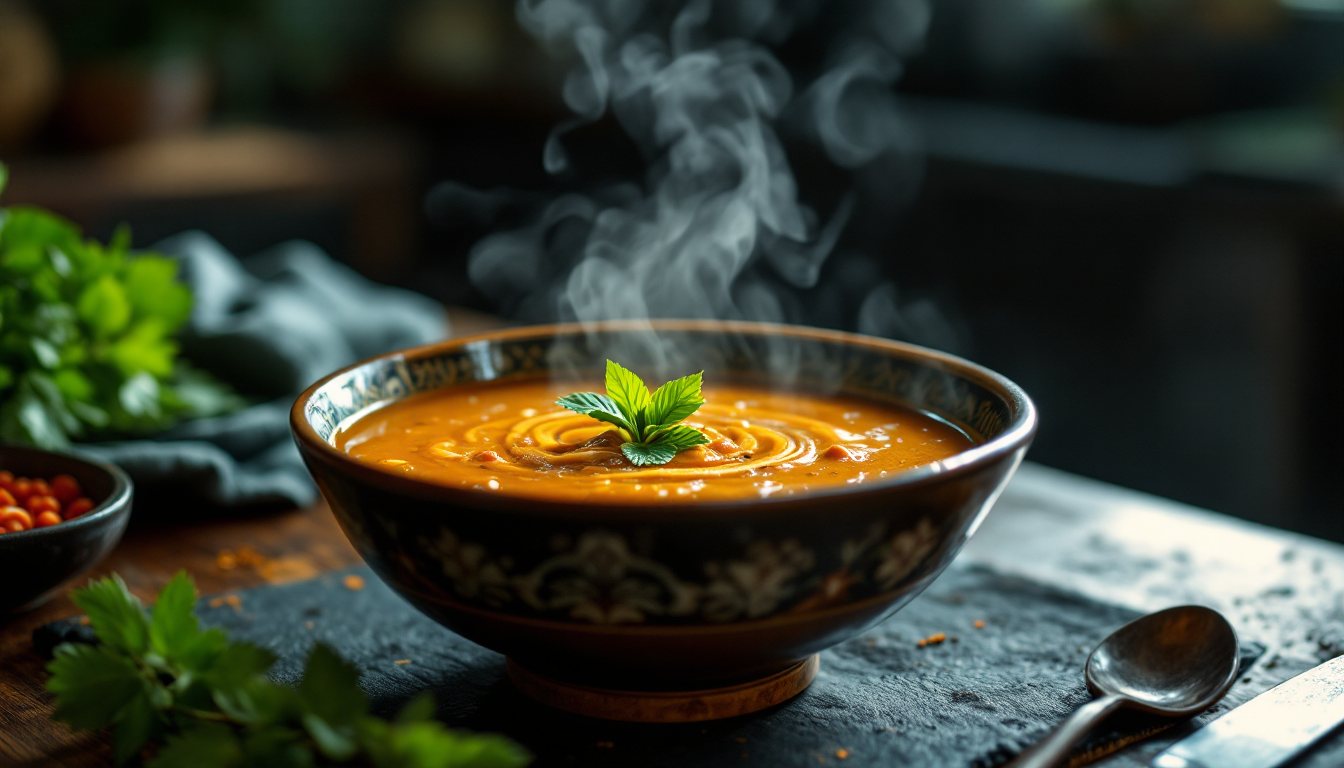
There's a moment in Southern Thai curry that doesn't exist in the Central style you've probably been cooking. It happens about four minutes into frying the paste — when the coconut cream has split completely, when you're no longer looking at an emulsion but at pure fat carrying pigment and volatile aromatics, when the paste starts to fry rather than steam. The smell changes. It goes from raw and sharp to something deeper, almost roasted. That moment is the whole point.
Central Thai cooks are taught to be cautious about this. Southern Thai cooks are trying to get there.
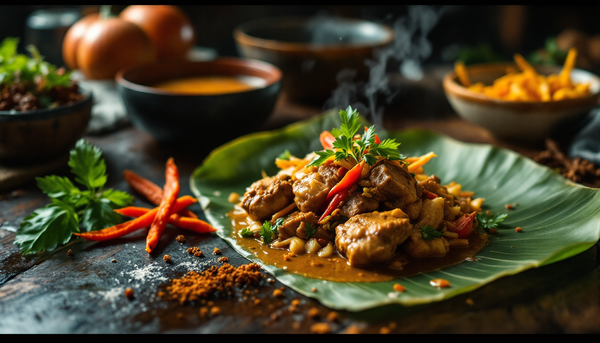
Gaeng Kua Pla Haeng — แกงคั่วปลาแห้ง Dry-fish Southern curry, Gulf coast style
This is pier food. Not market food, not restaurant food — pier food. The kind of thing made by families who live close enough to the dock that the dried fish comes from yesterday's catch. Around Khao Takiab you'll find versions of this sold from plastic bags at the morning market near the fishing boats, the curry slightly thicker than you'd expect, the heat arriving late and building long after you've swallowed. That delayed fuse is a Southern signature.
This is a Type A — single dish, maximum complexity. Sour from tamarind. Umami layered twice (dried fish, fish sauce). Bitter from the galangal coming through the fat-fry. Aromatic from the dried chilies and kaffir lime peel. Heat that doesn't announce itself until you've already committed. And the textural thing you probably haven't seen outside the South: the fish goes in twice — once into the paste to soften and infuse, once at the end to retain some texture. You'll feel both in the same bite.
For the paste — Prik Gaeng Kua:
- 8 dried spur chilies (prik chee fa haeng — พริกชี้ฟ้าแห้ง), deseeded, soaked 20 minutes in warm water. Keep the soaking water. - 4 dried bird's eye chilies (prik kee noo haeng — พริกขี้หนูแห้ง), whole — this is where your heat tolerance earns its keep - 1 teaspoon white peppercorns, coarsely cracked before going in - 1 tablespoon galangal (kha — ข่า), thin-sliced, slightly charred on a dry pan before pounding — this is the bitter register - 1 stalk lemongrass, inner pale section only, thin-sliced - 1 teaspoon kaffir lime zest (peel only, as little pith as possible — bitterness here is controlled, not accidental) - 6 cloves garlic, roughly chopped - 4 shallots, roughly chopped - 1 tablespoon dried shrimp paste (kapi — กะปิ), the darkest and most pungent you can find — if you're sourcing locally at Khao Takiab, ask for the version that's almost black and smells like the sea got angry - 1 teaspoon salt
Pound dry aromatics first — peppercorns, dried chilies — until powdered. Add galangal, lemongrass, zest. Pound until fibrous material surrenders. Add shallots, garlic, shrimp paste. Work until you have a paste that's dark red-brown and cohesive but not paste-smooth — a little texture in gaeng kua is correct.
A food processor will not give you this. You know that already. Forty years of cooking tells you the difference between cut and bruised.
For the curry:
- 400ml full-fat coconut cream (hua kati — หัวกะทิ) — separated, thick layer on top for starting the paste fry, thinner liquid reserved - 150g dried mackerel or dried pla thu (ปลาทู), broken into large pieces — bone-in is traditional and correct; the bone gives something to the broth during the long cook. Source this at the morning market near the pier, not from a supermarket. - 2 tablespoons fish sauce (nam pla — น้ำปลา) - 2 tablespoons tamarind concentrate — not paste, not powder, proper wet tamarind block dissolved in 3 tablespoons of the soaking water from your chilies - 1 teaspoon palm sugar (nam tan peep — น้ำตาลปี๊บ) - 4-5 kaffir lime leaves, torn — added late - Reserved coconut liquid — approximately 150-200ml, used to adjust consistency
Execution:
Medium-high heat. Heavy pan — if you have a wok with seasoning on it, use it. Add only the thick coconut cream — maybe 150ml. Let it bubble. Don't stir yet. Watch it. When it starts to look glossy and slightly oily at the edges, it's beginning to split. Encourage this. Increase heat slightly. Stir now — the goal is full fat separation, where you can see clear oil floating through the reduced cream. This takes 5-7 minutes of real attention.
Add your paste into the split cream. This is the moment. The paste will hit the fat and you'll hear it and smell it change. Fry hard. Four minutes minimum, stirring constantly, scraping the bottom. The paste should darken slightly and lose its raw edge. If it's sticking aggressively, add a tablespoon of the reserved coconut liquid — but resist the urge to add too much. You want to fry, not steam.
Add roughly half the dried fish now. Let it incorporate into the paste and fry for another two minutes. The fish will start releasing its own salt and umami directly into the fat.
Add remaining coconut liquid, tamarind water, fish sauce. Bring to a gentle simmer. Taste. The balance at this stage should be sour-forward with umami underneath — you haven't added the palm sugar yet. Let it simmer uncovered for 12-15 minutes. Consistency should be thicker than a Central Thai curry, almost coating-sauce territory.
Add palm sugar. Taste again — you're looking for the sour and sweet to achieve tension without either winning. Add remaining dried fish. Simmer 3-4 minutes more. The second addition of fish retains more texture and creates that dual register in each bite.
Finish with torn kaffir lime leaves. Rest two minutes off heat.
Serve with steamed jasmine rice. That's it. No garnish. Southern food doesn't perform — it delivers.
Showmanship note: This is not a dish you plate dramatically. You put the pot on the table. You let the smell do the work. The color — deep reddish-brown with that characteristic oil sheen on the surface — is its own announcement.
Soundscape:
Start the paste-fry with Moderndog — that 90s guitar energy is exactly right for the intensity of watching coconut cream split while you're frying paste at high heat. When you've added the fish and dropped to a simmer, shift to BOWKYLION — her voice carries the melancholy that Southern Thai coast food actually holds, especially when you're cooking something this honest. While the curry rests and you're plating rice, put on Ink Waruntorn — quieter, warmer, the right register for a dish that doesn't need explanation.
The curry will tell you when it's right. That's the Southern logic. The fat already knows.