The Curry That Moved South: Gaeng Kua Kling and What Heat Actually Means Here

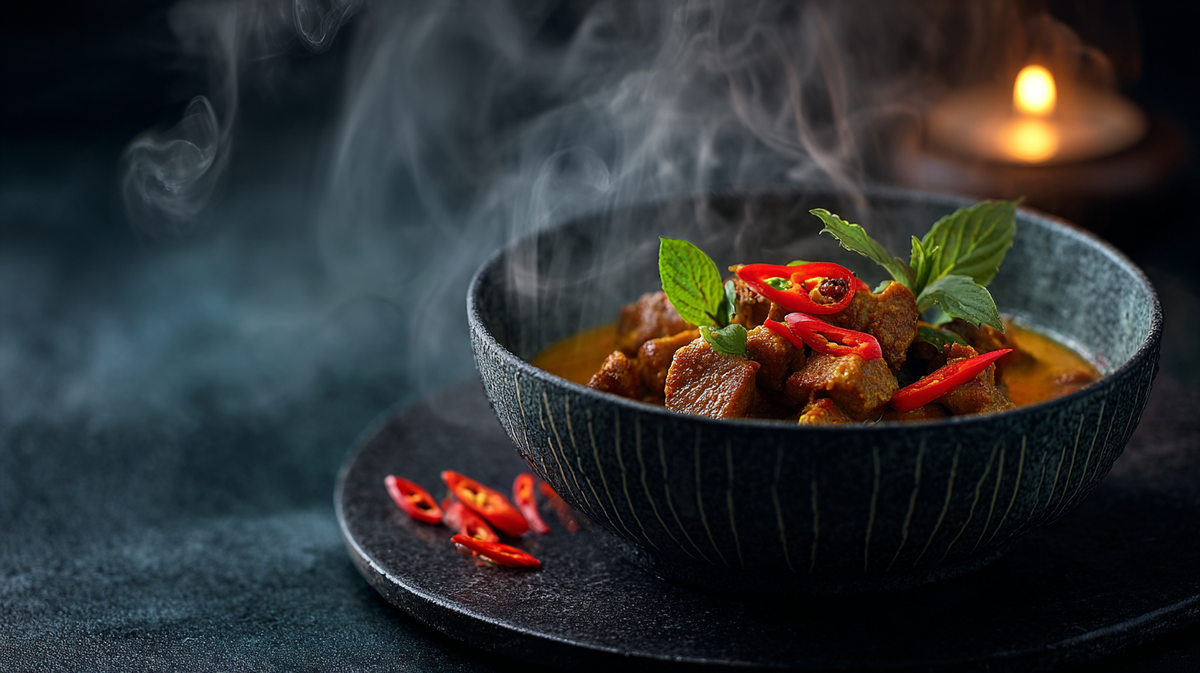
Last lesson we worked in brightness — acid, citrus, clean steam, fish that needed nothing to be itself. That dish was about restraint. This one is about commitment.
Kaeng Khua Kling (แกงคั่วกลิ้ง) is not Central Thai. Not Bangkok Thai. Not the coconut-softened curries that most Americans have met. This is Southern Thai dry curry — the one that tells you exactly where you are on the map, and that map is close to the Malaysian border, which is exactly where you're going to be living.
The name translates roughly as "stir-rolled curry" — khua means to dry-fry, kling describes the rolling motion you use in the wok to keep the paste moving without burning it. No coconut milk. The paste fries in its own oil, drawn out by heat, coated onto the protein, concentrated until each piece carries the full weight of every ingredient. This is what intensity actually looks like in Thai cooking. Not pour-and-simmer. Fry-and-roll.
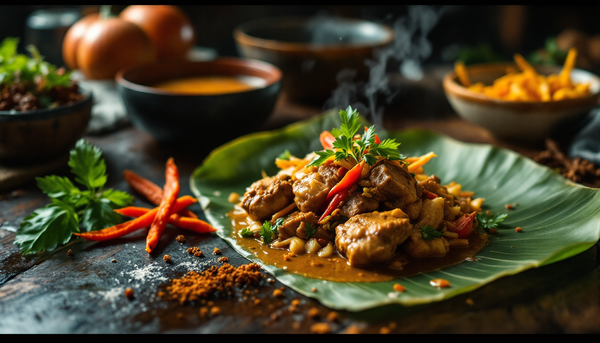
At Khao Takiab you'll find this at the morning market on the inland side of the hill, not the pier. Small vendors, banana leaf containers, eaten with rice at 7am before the heat arrives. The version they sell is usually pork — moo (หมู) — thin-sliced, sometimes with long beans, always with lemongrass you can see in torn pieces throughout. It will be hotter than you expect even with your tolerance. That is not a mistake. That is the point.
Here is the dish, built for two, from your kitchen.
Kaeng Khua Kling Moo (แกงคั่วกลิ้งหมู) Southern Thai Dry Pork Curry
The Paste — make this by hand if you have a mortar, and you should have a mortar:
- 8-10 dried red spur chilies (พริกชี้ฟ้าแดงแห้ง), seeds mostly in, soaked 20 minutes — this is your heat base, not bird's eye, not dried arbol, though arbol works in a pinch - 6 fresh bird's eye chilies (พริกขี้หนู) — these are the forward heat, the ones that arrive first - 4 stalks lemongrass (ตะไคร้), tender inner portion only, thin-sliced before pounding — Southern paste uses more lemongrass than Central, noticeably more - 1 inch fresh turmeric (ขมิ้น), peeled — this is what makes it yellow-orange, not curry powder, not dried turmeric, fresh if you can find it; your Asian markets in the US carry it now and Hua Hin will have it everywhere - 6 cloves garlic (กระเทียม) - 4 shallots (หอมแดง), roughly chopped - 1 tablespoon finely sliced kaffir lime peel (ผิวมะกรูด) — the zest, not the leaf; this is the aromatic that makes Southern paste Southern - 1 teaspoon black pepper (พริกไทยดำ), coarsely cracked first, then add to mortar - 1 teaspoon shrimp paste (กะปิ), the darkest you can find — if you can find Southern Thai kapi versus Central Thai, the Southern is fermented longer and has a different register entirely - 1 teaspoon salt
Pound in the order listed — dried chilies first until broken down, then each ingredient added progressively, working toward a cohesive paste. You know this process. It takes fifteen minutes of honest work. The paste should be fragrant before it's smooth — you're not making hummus, you're building a base that will fry.
The Rest:
- 300g pork shoulder (ไหล่หมู), sliced thin against the grain, then cut into short strips — the thinness matters, this is not a braise - 2 stalks lemongrass, bruised and cut into 2-inch pieces — goes in whole for texture and additional fragrance during cooking - 4-5 fresh kaffir lime leaves (ใบมะกรูด), torn - 1 tablespoon fish sauce (น้ำปลา) — Southern brand if possible; Tiparos is acceptable, Megachef is better - 1 teaspoon palm sugar (น้ำตาลมะพร้าว), just enough to round the edge without sweetening - 2 tablespoons neutral oil (not coconut — this is dry curry, coconut milk comes later in the repertoire)
Execution:
Wok over high heat until smoking. Add oil, let it shimmer, then add your paste. Here is where the technique lives: you are not sautéing, you are frying the paste, stirring and rolling constantly, pressing it against the wok surface. The water content drives off first — you'll hear it change, from wet sizzle to dry sizzle. When the paste begins to stick slightly and the oil separates out from it, when the fragrance deepens from raw-sharp to cooked-complex, you are ready. Two to three minutes of focused attention.
Add pork. Fold it into the paste with the rolling motion that gives the dish its name — no stillness, no resting, constant contact with heat. The paste coats every surface. Add the whole lemongrass pieces and torn kaffir lime leaves now. Fish sauce goes in halfway through the pork cooking. Palm sugar at the end.
Total wok time once protein is in: four to five minutes. Pork shoulder at this thickness cooks fast. You want it just past pink, still with some bite, the paste clinging and slightly caramelized on the edges of individual pieces.
No liquid. No water to deglaze. If it looks dry, that is correct.
Serve over jasmine rice, nothing else on the plate. This dish doesn't need garnish. At the morning market they don't garnish it. You eat it with the rice doing the work of cooling and balancing, the way rice was always meant to function in this cuisine — not a side, not a vehicle, an active ingredient in the eating.
Heat note for you specifically: the paste as written will be substantial — Malaysian-register, not Central Thai tourist-register. If you want to push it closer to the vendors at the morning market, add two more bird's eye chilies to the paste. They don't hold back. You shouldn't either.
What this teaches you:
The absence of coconut milk is the lesson. You now have two foundational techniques: the steamed brightness from last lesson, and this — the dry fry, the paste working in its own heat, no dairy softening, no liquid diluting. These are opposite poles. Everything else in Southern Thai cooking lives somewhere between them.
When you get to Khao Takiab, go to the morning market before 8am. Order this. Taste what the vendors do with paste they've been making the same way for decades. Then come home and make yours. The comparison will teach you more than I can.
Soundscape:
This meal has a specific energy — committed, direct, nothing decorative. Put on Three Man Down while the paste goes into the wok. Something from their older catalog, the tracks with more weight to them. When you sit down to eat, shift to Tattoo Colour — they have a warmth underneath the cool surface that matches what this dish does on the palate, all that heat with a clean finish. If the evening goes longer than dinner, Safeplanet to close it out. Contemplative without being quiet. Like sitting near the pier after the markets close, watching the lights on the water.